This is the official journal for multidisciplinary clinical and health sciences and a leading platform that bridges multidisciplinary clinical science with evidence-based practice to advance healthcare quality, safety, and patient outcomes.

Erosive Costs as Experiences of Family Caregivers of Patients with Persistent Vegetative States: A Qualitative Study

Document Type : Original Research Articles

Authors

1 Department of Nursing, School of Nursing and Midwifery, Social Determinants of Health Research Center, Lorestan University of Medical Sciences, Khorramabad, Iran.

2 Department of Nursing, School of Nursing and Midwifery, Lorestan University of Medical Sciences, Khorramabad, Iran.

3 Department of the English Language, School of Medicine, Lorestan University of Medical Sciences, Khorramabad, Iran.

Abstract
Background: The treatment and care of patients with vegetative states (VS) is very complex and specialized. Prolonged care and obtaining the necessary equipment for the care of these patients at home imposes erosive costs on families. The present study was conducted to explore the experiences of caregivers of patients with VS.
Methods: In the present qualitative study, 20 participants (12 family caregivers and 8 professional caregivers) were selected via the purposive sampling method. Data were collected through unstructured interviews and field notes. All interviews were recorded and transcribed and then analyzed by the qualitative content analysis method. The MAXQDA 10 software was used to facilitate the process of data analysis.
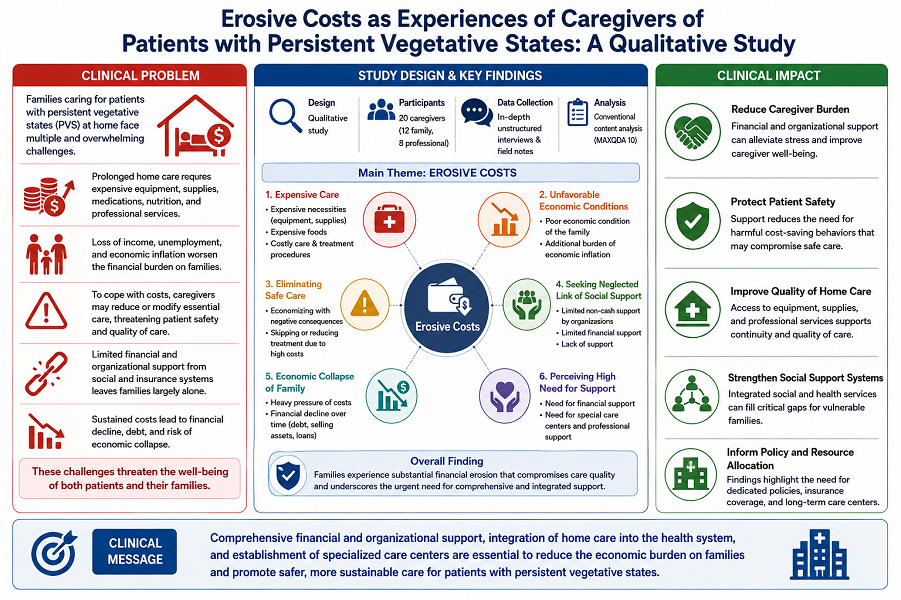
Findings: The main theme of the data analysis was “erosive costs”, which included the six categories of “expensive care”, “unfavorable economic conditions”, “eliminating safe care”, “seeking neglected link of social support”, “economic collapse of family”, and “perceiving high need for support”.
Conclusions: Based on the results of the study, the authorities and planners of the health system should pave the way for comprehensive support, especially financial support, to such families in their policymaking and planning.
Implications for Patient Care: The findings highlight the substantial financial and caregiving burden experienced by families caring for patients with persistent vegetative states at home. Inadequate financial and social support may lead caregivers to reduce or modify necessary care, potentially compromising care quality and patient safety. Integrating homecare services into the healthcare system, improving access to essential equipment and supplies, and providing targeted financial and professional support may help reduce these burdens and facilitate safer long-term care.

Graphical Abstract

Erosive Costs as Experiences of Family Caregivers of Patients with Persistent Vegetative States: A Qualitative Study

Keywords

Subjects