Introduction: The Need for a New Antifungal Therapeutic Era
Invasive fungal infections remain a major therapeutic challenge, particularly in immunocompromised patients (1). Candida, Aspergillus, Cryptococcus, and other pathogenic fungi can cause severe disease with substantial morbidity and mortality (1). At the same time, the epidemiology of invasive fungal diseases is changing (2). The emergence of multidrug-resistant Candida auris isolates has further complicated clinical management (3). The current antifungal armamentarium remains limited, comprising four major classes—azoles, echinocandins, polyenes, and pyrimidine analogs such as flucytosine—each associated with important clinical limitations and unmet therapeutic needs (4, 5). However, each class has important limitations. Toxicity, drug–drug interactions, and pharmacokinetic variability can compromise the safety and effectiveness of antimicrobial therapy (6). These limitations are particularly problematic when infections occur in critically ill or immunocompromised patients (7). Antifungal resistance has further complicated the management of fungal infections (8). Extensive exposure to antifungal drugs can select resistant populations, while intrinsic biological differences among fungal species can limit the effectiveness of available therapies (9). Resistance may also emerge through several mechanisms, including target modification, altered drug uptake, increased drug efflux, and adaptive changes in fungal physiology (9). Consequently, developing agents that act through mechanisms distinct from established antifungal classes has become an important therapeutic priority (10). Recent developments provide some grounds for optimism. Several agents with new or differentiated mechanisms have entered clinical development, while others have reached clinical use (11). Fosmanogepix, olorofim, ibrexafungerp, and rezafungin represent different approaches to overcoming limitations of conventional therapy (12). Their development reflects a broader shift in antifungal drug discovery, with increasing emphasis on novel molecular targets and optimization of pharmacological properties alongside the modification of existing agents (13). Therefore, the next phase of antifungal therapy will require more than simply adding new compounds to the existing drug classes. Successful development will depend on identifying fungal-specific vulnerabilities, overcoming resistance, optimizing pharmacokinetic and pharmacodynamic properties, and translating promising molecular targets into clinically meaningful therapies (14). This review summarizes emerging antifungal agents and their novel targets, with particular emphasis on how these approaches may reshape the treatment of difficult-to-treat fungal infections.
Why Current Antifungal Therapy Is No Longer Enough
Despite major advances in antifungal treatment, the therapeutic options remain limited. Most currently available antifungal drugs act through a limited range of mechanisms, primarily targeting fungal cell membranes, ergosterol biosynthesis, and cell wall synthesis (10). This limited target range creates an important challenge because resistance to one drug can sometimes affect the activity of related agents (15). Azole antifungals inhibit lanosterol 14α-demethylase, encoded by ERG11, thereby disrupting ergosterol biosynthesis (16). Azoles are widely used as first-line agents for the treatment of Candida infections. However, their prolonged and repeated use has contributed to the emergence of antifungal resistance and treatment failure (16). Changes in the drug target, increased expression of efflux pumps, and alterations in sterol metabolism can all reduce drug susceptibility (17). Drug–drug interactions and the complex pharmacokinetic profiles of antifungal agents pose important challenges to their clinical use (18). Echinocandins have an important advantage because they target the fungal cell wall rather than ergosterol synthesis (19). Echinocandins inhibit β-(1,3)-D-glucan synthase and are important therapeutic agents for invasive Candida infections. However, their antifungal activity varies among fungal pathogens, with limited or absent activity against certain genera, including Cryptococcus, Fusarium, and Mucorales (19). Antifungal resistance can also arise through alterations in FKS genes, which encode components of the β-1,3-glucan synthase complex (20).
Polyene antifungals such as amphotericin B remain important therapeutic agents for serious invasive fungal infections; however, their clinical use is limited by host toxicity, particularly nephrotoxicity (21). Lipid-based amphotericin B formulations improve tolerability and reduce toxicity, although nephrotoxicity remains a concern (21). Flucytosine provides another useful therapeutic option, particularly in combination regimens. Its rapid development of resistance when used alone restricts its role as monotherapy (4). The problem is therefore not simply the emergence of resistance. It is the narrow therapeutic landscape itself, characterized by a limited repertoire of antifungal drug classes and the challenges associated with developing novel therapeutic agents (22). Because fungi are eukaryotes and share important cellular features with human cells, the number of selectively exploitable drug targets is limited, increasing the challenge of developing antifungal agents with minimal host toxicity (23). Identifying fungal-specific vulnerabilities is consequently a central challenge in antifungal drug discovery. Another concern is the mismatch between the growing burden of fungal disease and the number of genuinely novel therapeutic options (14). Although promising antifungal candidates are emerging, current therapeutic strategies and several ongoing research efforts continue to build on established fungal targets and biological pathways, underscoring the need to expand antifungal discovery toward novel molecular targets and chemically distinct drug classes (14).
These limitations underscore the need to expand the antifungal target space by identifying new molecular targets and developing alternative therapeutic strategies that extend beyond preserving activity against resistant isolates (8). New agents should also provide better safety, predictable pharmacokinetics, improved tissue penetration, and activity against pathogens that are poorly controlled by current therapies (13). Such characteristics could expand the therapeutic window and reduce the risk of treatment failure (13). The antifungal drug-development landscape is expanding beyond traditional classes such as azoles, polyenes, and echinocandins, with emerging agents targeting alternative pathways, including GPI-anchor biosynthesis and pyrimidine metabolism, advancing into clinical evaluation (24). These approaches may broaden the antifungal arsenal and, more importantly, provide therapeutic strategies that are less vulnerable to existing resistance mechanisms.
During the COVID-19 pandemic, mucormycosis gained recognition as a severe opportunistic fungal complication, with a higher incidence among individuals with diabetes, poor glycemic control, and those receiving corticosteroid therapy (25). The interaction of metabolic disturbances, immune dysfunction, and treatment-related factors may increase susceptibility to Mucorales infections (25). CAM also highlights the limitations of current antifungal therapy. Mucorales exhibit intrinsic resistance to voriconazole and generally show poor in vitro susceptibility to echinocandins, limiting the therapeutic utility of these agents in mucormycosis (26). Treatment relies primarily on prompt diagnosis, appropriate antifungal therapy, often with liposomal amphotericin B, and surgical debridement when indicated. Isavuconazole and posaconazole are additional options in selected cases. This clinical challenge underscores the need for pathogen-specific drug development and careful evaluation of emerging antifungal agents before their use against mucormycosis can be recommended.
Emerging Antifungal Agents and Novel Molecular Targets
The development of novel antifungal agents with mechanisms of action distinct from those of conventional azoles and echinocandins has become an important research priority, particularly in response to increasing antifungal resistance and the limitations of existing therapies (27). This approach is important because agents with novel mechanisms of action may retain activity against certain drug-resistant fungal isolates and circumvent some resistance mechanisms associated with established therapies (27). Several antifungal candidates have also advanced into clinical development, reflecting ongoing efforts to expand the therapeutic options available for fungal infections (27).
- Targeting Fungal GPI Biosynthesis: Fosmanogepix
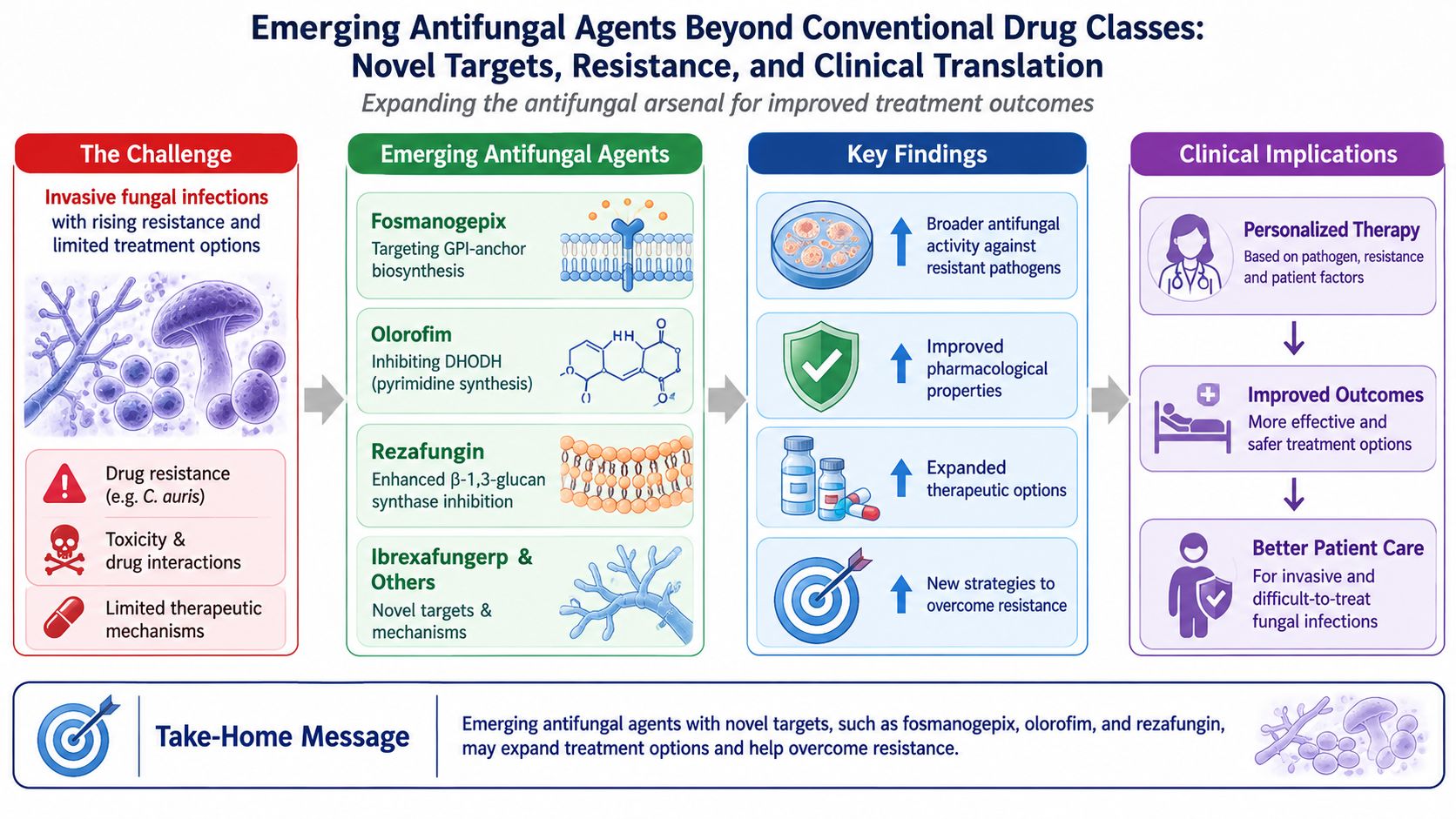
Fosmanogepix represents a first-in-class antifungal approach that targets the fungal Gwt1 enzyme, a key component of glycosylphosphatidylinositol-anchored protein biosynthesis, and exhibits broad in vitro activity against diverse fungal pathogens, including several drug-resistant species (28). These anchors are required for the proper localization and function of several proteins on the fungal cell surface (29). Disruption of this pathway can therefore interfere with essential processes related to fungal growth and virulence (29). Fosmanogepix has demonstrated broad-spectrum in vitro activity against pathogenic fungi, including Candida species and isolates resistant to established antifungal classes (30). Its activity also extends to several difficult-to-treat moulds, including Aspergillus, Scedosporium, Lomentospora prolificans, and Fusarium, although activity varies across fungal species (30). Its oral and intravenous formulations may enhance treatment flexibility. More importantly, Gwt1 inhibition interferes with the maturation and localization of GPI-anchored mannoproteins, thereby compromising fungal cell wall integrity and reducing hyphal formation and virulence (31). It represents a shift toward targeting a distinct fungal cellular process—the GPI-anchor biosynthesis pathway—that differs from the principal mechanisms exploited by conventional antifungal agents (31). This may provide an important option when resistance or intolerance limits existing treatments.
- Targeting Pyrimidine Biosynthesis: Olorofim
Olorofim represents another mechanistically distinct approach. It inhibits dihydroorotate dehydrogenase (DHODH), an enzyme involved in de novo pyrimidine biosynthesis (32). Pyrimidines are essential for nucleic acid synthesis and cellular growth. Inhibition of this pathway can therefore produce a profound effect on fungal proliferation (33). Olorofim is particularly promising because of its in vitro activity against several filamentous fungi that can be difficult to treat with conventional antifungal agents, including azole-resistant Aspergillus fumigatus and selected species of Scedosporium, Lomentospora, and other moulds (34). development of olorofim also illustrates the value of targeting fundamental metabolic pathways in fungi (35). However, its eventual clinical role will depend on further evidence regarding efficacy, resistance development, pharmacokinetics, and use in combination with other antifungal agents.
- Next-Generation β-1,3-Glucan Synthase Inhibition: Rezafungin
Not every emerging antifungal drug introduces a completely new molecular target. Some aim to improve an established mechanism while overcoming important pharmacological limitations. Rezafungin is an example of this strategy. Like other echinocandins, it inhibits β-1,3-D-glucan synthase, thereby impairing fungal cell-wall integrity (36). Its principal distinguishing features are its prolonged half-life, enhanced chemical stability, and favorable pharmacokinetic/pharmacodynamic properties, which support once-weekly intravenous administration (36). This property may simplify treatment and reduce the burden associated with frequent dosing (37). It also makes the drug attractive for settings in which prolonged antifungal therapy is required (37).
Rezafungin illustrates how improvements in pharmacological properties can enhance the therapeutic utility of an established antifungal target (38). In vitro studies demonstrate anti-biofilm activity comparable to caspofungin, with potentially greater inhibition of biofilm formation under specific experimental conditions (38).
- Other Emerging Strategies
Several other agents are expanding the antifungal therapeutic landscape. Ibrexafungerp is a first-in-class triterpenoid antifungal that inhibits β-(1,3)-glucan synthase through a mechanism distinct from that of echinocandins (39). Its oral formulation offers a practical therapeutic advantage over intravenously administered echinocandins, potentially facilitating treatment strategies in selected clinical settings (39). Oteseconazole represents another targeted approach. It is a tetrazole antifungal designed to enhance selectivity for fungal CYP51 while reducing off-target inhibition of human cytochrome P450 enzymes (40, 41). This selectivity may help reduce some limitations associated with conventional azole therapy, particularly off-target effects and drug–drug interactions (42, 43). Oteseconazole therefore illustrates a medicinal chemistry strategy in which structural optimization improves selectivity for an established antifungal target, CYP51, rather than requiring a change in the target itself (44). Other potential antifungal strategies are exploring vulnerabilities in fungal membrane biology and phospholipid metabolic pathways, which are closely linked to membrane integrity, cell-wall function, and fungal virulence (45). Targeting ergosterol biosynthesis through CYP51 inhibition and developing novel azole derivatives represent promising approaches to expanding the antifungal arsenal (46). This diversification is particularly important in the context of antifungal resistance. (47). For this reason, the future therapeutic value of emerging antifungals will depend not only on their intrinsic antifungal activity but also on their ability to retain efficacy against existing resistance mechanisms (8, 48). The most promising direction may therefore be a diversified therapeutic portfolio that combines novel therapeutic approaches with optimized versions of established mechanisms (27). This strategy could provide clinicians with more options for matching antifungal therapy to the pathogen, resistance profile, infection site, and characteristics of the individual patient.
Overcoming Antifungal Resistance: From New Drugs to New Strategies
The development of new antifungal agents is only one part of the response to antifungal resistance (49). Resistance can emerge even against newly introduced drugs, particularly when treatment creates sustained selective pressure (49). Therefore, maintaining antifungal efficacy requires complementary strategies, including drug combinations, repurposing, and improved drug-delivery systems, in addition to the discovery of new compounds (50). One important approach to optimizing antifungal therapy is antifungal susceptibility testing, which can help guide drug selection. Susceptibility profiles vary across Candida species, and resistance to fluconazole was substantially more frequent in C. glabrata (5.9%) than in C. albicans (1.2%) in a multicenter surveillance study (51). Reliable antifungal susceptibility testing can support treatment selection by identifying resistance patterns that may compromise the activity of alternative agents (51). This approach becomes increasingly important as the number of therapeutic options expands.
Combination therapy is another potential strategy. Combining antifungal agents with different mechanisms of action may enhance antifungal activity and, in certain drug combinations, help prevent the emergence of resistant fungal mutants (52). However, combination therapy should not be assumed to be beneficial in every clinical setting. Drug–drug interactions, agent-specific toxicity, and the potential for antagonistic effects may limit its clinical utility (53). Moreover, the applicability of combination regimens may remain uncertain when robust clinical evidence is lacking (53). Rational antifungal combinations should be guided by mechanistic and clinical evidence. Drug repurposing may accelerate therapeutic development by identifying new indications for existing compounds; however, their suitability for a new indication requires evaluation of dose compatibility, pharmacokinetic properties, safety, and efficacy (54). Optimizing antimicrobial dosing based on pharmacokinetic/pharmacodynamic principles is essential for achieving adequate drug exposure and therapeutic concentrations at infection sites (55). Finally, integrating molecular resistance surveillance with clinical, genomic, microbiological, and epidemiological data may improve resistance detection and support more targeted antifungal therapy (56). Overall, sustaining the effectiveness of antifungal therapy requires the development of novel agents, rational combination regimens, optimization of drug delivery and safety profiles, and effective resistance surveillance to preserve the utility of existing and emerging treatments (57).
From Drug Discovery to Clinical Translation
The discovery of a promising antifungal compound does not guarantee clinical success. Clinical translation may be limited by toxicity, unfavorable pharmacokinetics, inadequate tissue penetration, and reduced efficacy in complex infections (58). These challenges are particularly relevant to invasive fungal diseases, in which underlying illness, immunosuppression, pathogen-specific barriers, and infection-site characteristics can affect drug distribution and therapeutic response (58). Moreover, limited epidemiological data, diagnostic challenges, and the complexity of infections caused by multidrug-resistant or less common fungal pathogens complicate the development of robust clinical evidence (4). Well-designed clinical trials using clinically meaningful endpoints are therefore essential to establish whether an intervention provides meaningful benefits to patients (59). Resistance potential should be considered early during therapeutic development, as suboptimal drug exposure may promote the emergence of resistant mutants and contribute to treatment failure (59). Future antifungal development should adopt an integrated translational framework that evaluates antifungal activity and molecular innovation alongside selectivity, pharmacokinetic properties, tissue distribution, safety, resistance potential, and clinical feasibility (60). Early consideration of these factors may improve the likelihood that promising candidates will translate into effective clinical therapies.
Future Directions
Future antifungal development should prioritize the identification of selective fungal targets, improved understanding of host–pathogen interactions, and strategies to overcome both intrinsic and acquired resistance (61). Precision therapy may be improved by integrating rapid pathogen identification, susceptibility testing, and patient-specific clinical data, while molecular resistance detection and surveillance may support the timely recognition of resistance patterns and emerging outbreaks (62). Drug repurposing and selected antifungal drug combinations represent promising complementary approaches to conventional antifungal therapy, although their efficacy and safety require further validation in appropriate preclinical and clinical studies (63). Advances in computational drug discovery and artificial intelligence may accelerate the identification of potential drug targets and the design and optimization of promising drug candidates (64). Ultimately, successful clinical translation will require evidence of antifungal efficacy, acceptable safety, favorable pharmacokinetic properties, and validation of therapeutic benefit in clinically relevant models (60).
Conclusions
Antifungal therapy is entering a period of important development. The limitations of azoles, echinocandins, polyenes, and other established agents highlight the need for new therapeutic strategies. Emerging compounds such as fosmanogepix, olorofim, rezafungin, and ibrexafungerp demonstrate that the antifungal landscape is becoming more diverse. The most important advance is not simply the introduction of new drugs. It is the expansion of the biological targets available for therapeutic intervention. New mechanisms may provide options against resistant pathogens and reduce dependence on a limited number of established drug classes. However, innovation must be accompanied by appropriate diagnostics, resistance surveillance, rational pharmacology, and well-designed clinical studies. The future of antifungal therapy will therefore depend on integrating drug discovery with precision treatment and resistance management. This integrated approach may help transform promising molecular discoveries into durable clinical solutions for patients with serious fungal infections.
Implications for Patient Care
Emerging antifungal agents may expand treatment options for patients with invasive fungal infections, particularly when resistance, intolerance, or limited activity of conventional therapies complicates treatment. Agents with distinct mechanisms of action may offer potential alternatives for selected resistant pathogens; however, treatment decisions should be guided by pathogen identification, antifungal susceptibility results, infection site, patient-specific risk factors, and the available clinical evidence. Optimizing drug exposure, monitoring toxicity and drug–drug interactions, and implementing resistance surveillance remain essential to improving treatment outcomes. Although these developments are promising, the clinical benefits of emerging agents must be established through appropriately designed clinical studies before their broader therapeutic role can be defined. Integrating novel antifungal therapies with precision diagnostics and individualized treatment strategies may ultimately improve the management of difficult-to-treat fungal infections.
Conflict of Interest
The authors declared no conflicts of interests.
Funding
The authors received no specific funding for this work.
Ethics Statement
The authors confirm that all ethical principles of research and scientific publication, including plagiarism prevention, data integrity, and avoidance of duplicate publication, were fully observed.
Data Availability Statement
No new data were generated or analyzed during this study. All information discussed in this review is available in the published literature cited in the manuscript.
Acknowledgments
The authors gratefully acknowledge the institutional support and resources provided for the successful completion of this research.
Author Contributions
FB and AS contributed equally to the conceptualization and collection of information. FB prepared the original draft of the manuscript, while AS contributed to the preparation and critical revision of the final version. Both authors reviewed and approved the final manuscript.
Artificial Intelligence (AI) Disclosure
Artificial intelligence (AI) was used solely for language editing and improving the clarity and readability of the manuscript. The authors reviewed and approved the final text and take full responsibility for the accuracy and integrity of the manuscript.
Publisher's Note
The graphical abstract was prepared by the journal's editorial team using artificial intelligence-assisted design tools and was reviewed and approved by the authors prior to publication.